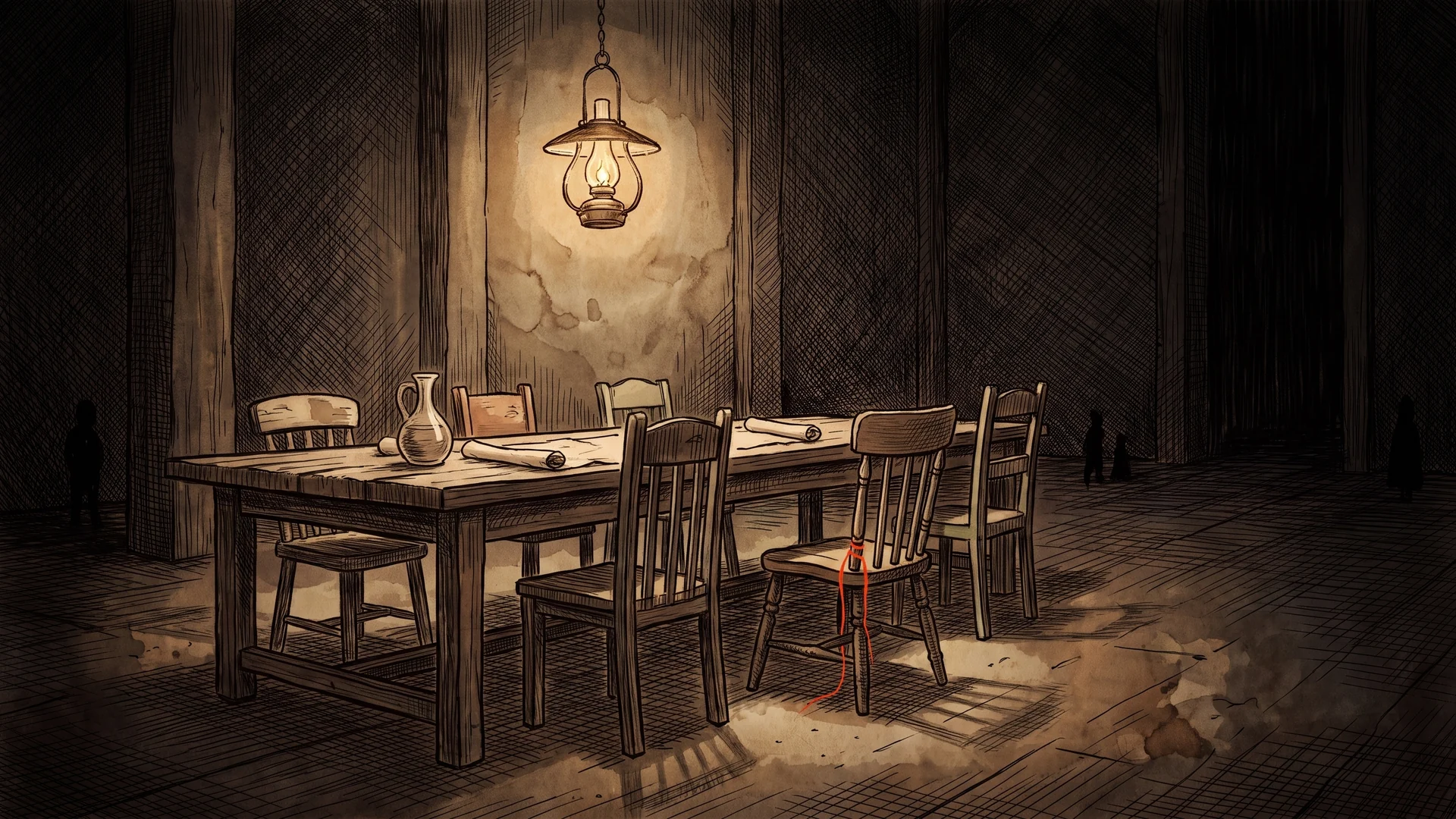

The Table
You have been having the same conversation for months. With your partner, your co-founder, your board. It arrives at the same wall every time. This is the room where it finally goes somewhere else.
THREE WAYPOINTS BELOWThe pattern.
The fight that arrives on schedule. The team doing exactly what you asked and nothing you meant. The boundary everyone can feel and nobody will name. The partnership drifting a degree a month while everyone insists things are fine. You do not need to arrive with it diagnosed. Most people can’t name it; they can only point at where it hurts. Pointing is enough. I will do the naming, out loud, with you in the room.
The instruments.
The C4™ Method, from The Art of Difficult Conversations, for the fight on a fixed circuit: it separates what a conflict says from what it means. Devotion Habits™, repeatable practices for partnerships that want depth without homework guilt. The Human-First Operating System™, for leaders whose people problem turned out to be a systems problem. Sixteen years field-testing: plants at war, co-ops a week from strike, engineering teams, marriages, chosen families. Not scripts. Instruments. They keep working when you are tired, triggered, or two drinks deep at a wedding.
You write. I answer honestly.
The Table is not a checkout. It is a correspondence. You write one short letter about the terrain you are standing in. I write back and tell you plainly whether I am the right strange tool for the job, what I would propose, and what it costs. If I am not the right tool I say so, and I usually know who is. No discovery call designed to wear you down. One letter, one honest answer, and then you decide.
Charter an expedition
One letter. Who is at the table, what keeps happening, and what you want instead. The draft above already got you most of the way there.
Write the letter